Inside the Silent Investigation of
China Eastern Flight MU5735
At 29,000 feet over southern China, China Eastern Flight MU5735 was cruising normally. Minutes later, the Boeing Seven Thirty Seven Eight Hundred was in a near-vertical dive, dropping 29,000 feet in under two minutes before impacting a mountainside in Guangxi province. All 132 people on board were killed. It remains the deadliest aviation accident in China in decades.
Four years on, no official explanation exists.
Then, on April 29, 2026, a single FOIA request — filed by an anonymous Chinese citizen with the U.S. National Transportation Safety Board — cracked open the silence. What the flight data recorder showed has fundamentally changed how investigators, aviation analysts, and the families of victims understand what happened in that cockpit.
This is not a story about a mechanical failure. The data does not point there. This is a story about what the evidence shows, why the China Eastern MU5735 investigation has frozen between Washington and Beijing, and what happens when geopolitics and institutional silence become part of the accident record itself.
MU5735 Flight Profile: What Happened During the Final Minutes
MU5735 departed Kunming on March 21, 2022, bound for Guangzhou. It was operating normally at cruising altitude with no reported technical issues, no distress call, and no adverse weather. Radar tracking shows the aircraft entering a rapid, nearly vertical descent — a profile that no known mechanical failure mode on a Boeing Seven Thirty Seven produces.
The aircraft briefly and partially levelled off during the descent before resuming its final dive into terrain. The entire sequence from cruise altitude to impact took less than two minutes.
The cockpit transmitted no distress call. No emergency was declared. Ground controllers watched the transponder track drop off their screens.
The aircraft involved was a Boeing Seven Thirty Seven Eight Hundred registered as B-1791, powered by two CFM Fifty Six turbofan engines, delivered new to China Eastern in June 2015. It had no recorded history of significant airworthiness issues. Notably, the flight deck carried three pilots — unusual but operationally legal during training rotations.
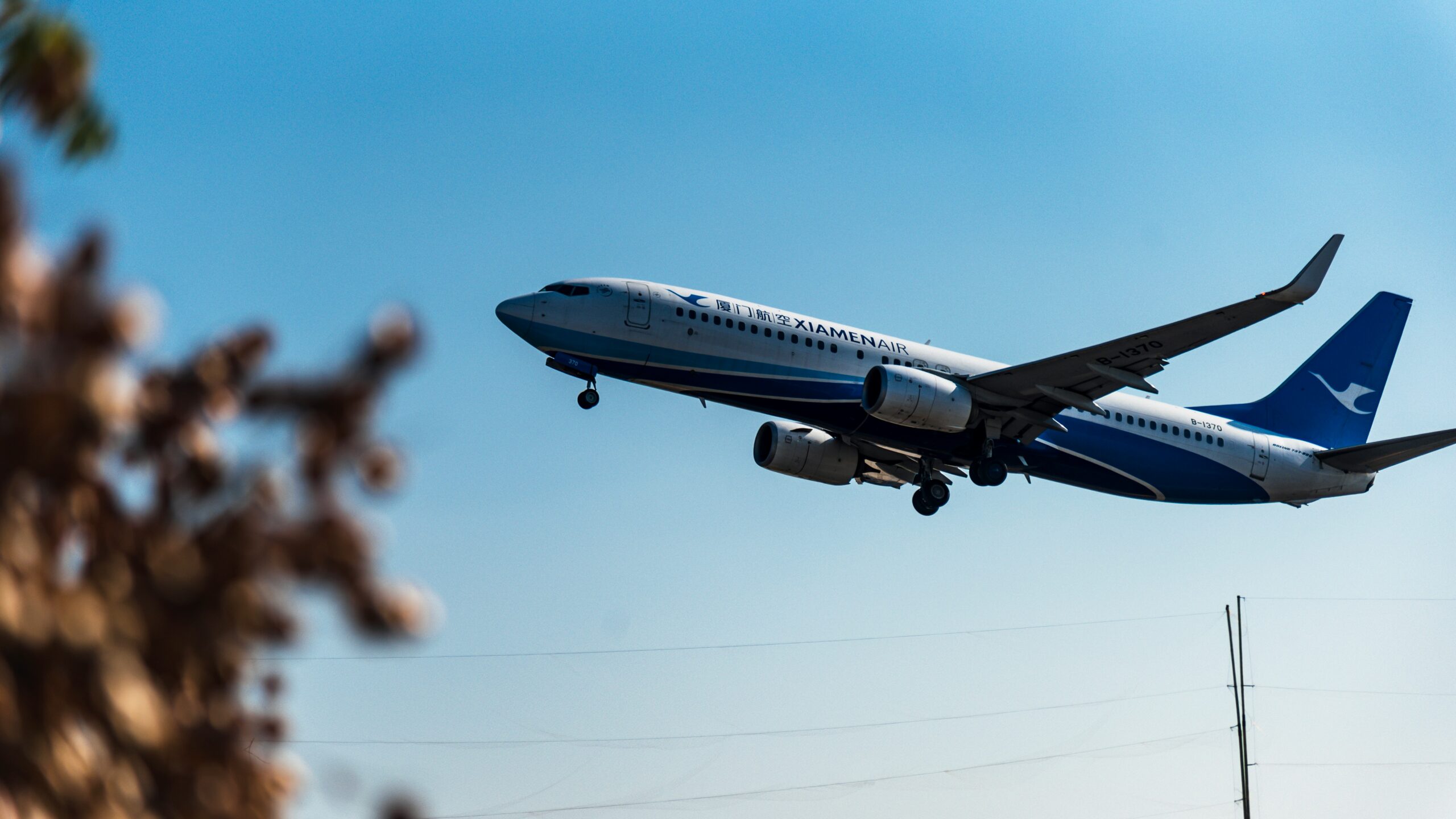
A Boeing Seven Thirty Seven Eight Hundred operated by a Chinese carrier — the same aircraft type as China Eastern Flight MU5735. The aircraft had no recorded history of significant airworthiness issues prior to the March 2022 crash. Photo: Hanyun Guo / Unsplash
MU5735 Investigation Timeline
| Date | Event |
|---|---|
| March 21, 2022 | MU5735 crashes in Guangxi province. All 132 aboard killed. |
| March 2022 | Flight data recorder and cockpit voice recorder recovered from wreckage and sent to the NTSB laboratory. |
| May 2022 | Wall Street Journal reports U.S. officials say flight data shows deliberate inputs. China denies. |
| March 2023 | CAAC issues one-year investigation progress notice. No definitive conclusions reached. |
| March 2024 | CAAC issues two-year notice. Near-identical language to the first. No new findings. |
| March 2025 | Third anniversary passes with no CAAC update. |
| May 2025 | Chinese citizen requests CAAC investigation progress under government disclosure law. CAAC refuses, citing national security. |
| January 2026 | Anonymous Chinese citizen files FOIA request with the U.S. NTSB. |
| April 29, 2026 | NTSB responds. FDR combined download report enters public record for the first time. |
| May 1, 2026 | NTSB posts materials to its public FOIA reading room. |
| May 2026 | NTSB schedules investigative hearing on MU5735. CAAC has issued no response to FDR data. |
| March 2026 | Fourth anniversary passes with no CAAC update. Investigation now one year past ICAO three-year deadline. |
What the NTSB FOIA Release Revealed About MU5735
The NTSB‘s FOIA response contained the FDR combined download report, NTSB-CAAC email correspondence, and a July 2022 data download report. It is the first time any official technical material on MU5735 has been placed in public view.
The FDR data is specific.
Approximately 23 seconds before the flight data recorder stopped recording, the fuel control switches for both engines were moved to the CUTOFF position — within roughly one second of each other. On a Boeing Seven Thirty Seven, the fuel control switches are physical levers located on the center pedestal. Moving them to CUTOFF requires a deliberate physical action: the switch must be pulled upward against a mechanical detent before it can be moved to the cutoff position. This design exists specifically to prevent accidental activation.
The result of moving both switches to CUTOFF is immediate and total: fuel supply to both CFM Fifty Six engines is severed simultaneously, both engines begin spooling down, and the aircraft loses its primary source of electrical generation.
Immediately after the fuel switches moved, the autopilot disengaged. Seconds later, one of the yokes was pushed forcefully forward. The control wheel was also turned, producing at least one full 360-degree roll input during the descent. Aileron oscillations during the dive suggest at least one person was actively working against the descent.
The fuel switches were never returned to the run position. No engine restart was attempted at any point during the descent. The FDR stopped recording when electrical power was lost — meaning the final moments of the flight remain undocumented in the data record.
The cockpit voice recorder, which continued briefly on backup power, was recovered and analyzed. Its contents have not been made public. The NTSB has confirmed it does not retain copies of the CVR audio. That recording remains in the custody of Chinese authorities.
CNN aviation safety analyst David Soucie stated the fuel switches were manually placed in the off position just prior to the crash. Aviation consultant Tony Stanton noted the sequence is very difficult to reconcile with a conventional dual-engine mechanical failure, while cautioning that the FOIA document is not a final accident report and should not be treated as one.
That distinction matters. The data shows what the aircraft’s systems recorded. It does not, on its own, establish who moved the switches or why.
How Boeing 737 Fuel Cutoff Switches Actually Work
Understanding the mechanics matters for understanding why this data point carries the weight it does.
On the Boeing Seven Thirty Seven Next Gen platform, each engine has a dedicated fuel control switch on the center pedestal. In normal operation, both switches sit in the RUN position throughout the flight. They control the high-pressure fuel shutoff valve inside each engine — when set to RUN, fuel flows; when set to CUTOFF, the valve closes and fuel stops.
The mechanical detent — the physical resistance the switch must overcome before moving to CUTOFF — is not a minor obstacle. It exists because an inadvertent cutoff of both engines in cruise is not a recoverable situation at most altitudes without exceptional crew response time and altitude available for windmilling restart attempts.
A dual-engine flameout from fuel starvation does not look like a compressor stall, a bird strike, or a structural failure in the data. The engine parameters — N1, N2, EGT, fuel flow — follow a specific, recognizable decay curve. The FDR signature of fuel cutoff is distinct and not easily confused with other failure modes by trained analysts.
The 23-second window between fuel cutoff and FDR power loss is consistent with the engine spool-down timeline on CFM Fifty Six engines following fuel shutoff. The sequence recorded — cutoff, autopilot off, yoke forward — follows in a compressed timeframe that leaves very little room for alternative mechanical explanations.
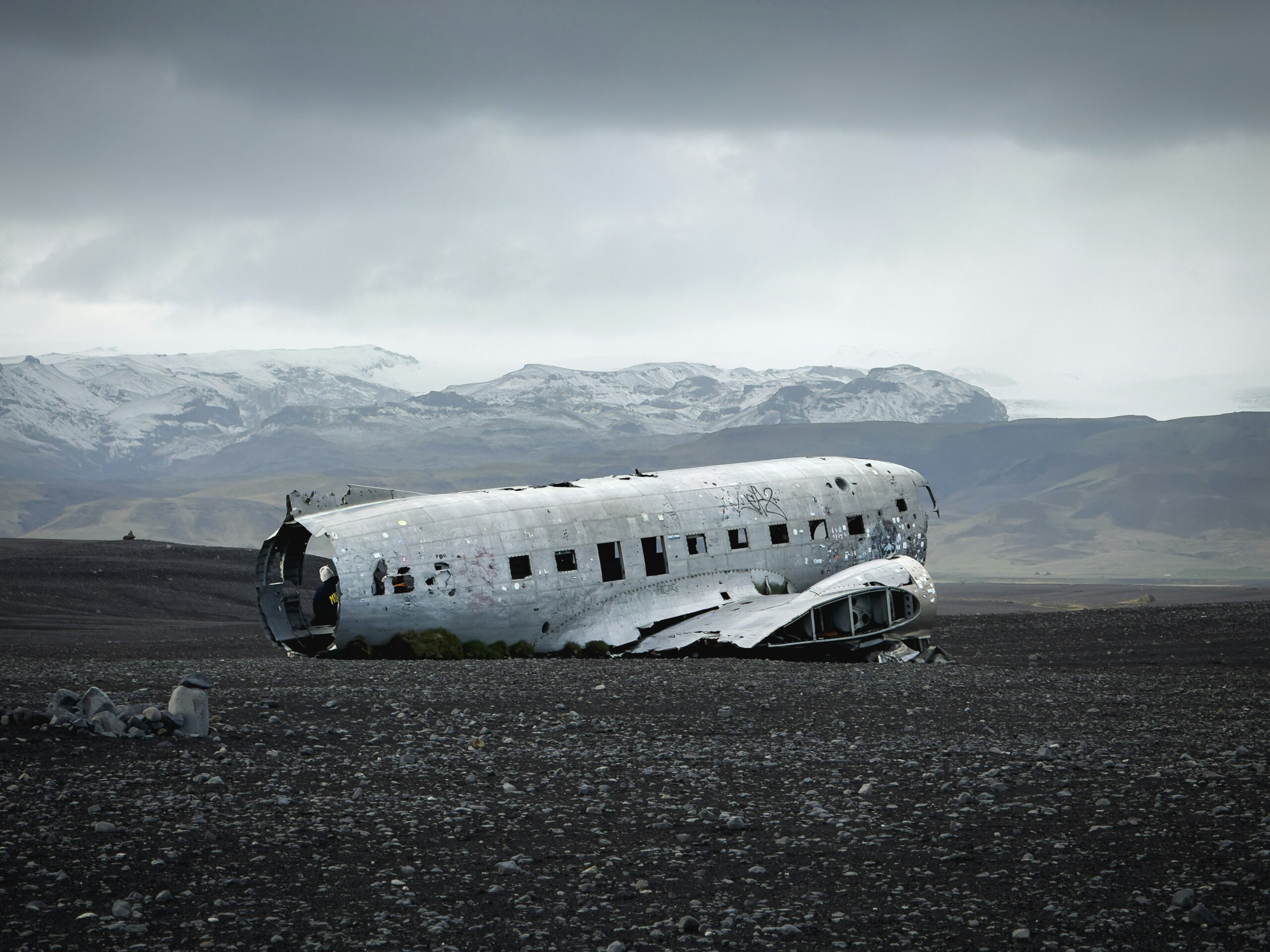
Four years after impact, the MU5735 investigation remains without a final report or probable cause determination — a structural failure of the international accident investigation framework. Photo: Artem Shuba / Unsplash
The CAAC, ICAO Annex 13, and the MU5735 Regulatory Standoff
Under ICAO Annex 13 — the international convention governing aircraft accident investigations — the state of occurrence is responsible for conducting the investigation and releasing findings. China, as the state of occurrence, leads the MU5735 investigation. The NTSB participated as an observer, not as lead investigator, by virtue of the United States being the state of manufacture for the Boeing aircraft.
ICAO Annex 13 sets clear timelines. A preliminary report is required within 30 days. A final report should be released within 12 months, or three years at the absolute outside, with progress updates required if that deadline cannot be met.
MU5735 is now one year past the three-year deadline. The four-year anniversary in March 2026 passed with no update from the CAAC — the third consecutive anniversary to produce no new official findings.
In May 2025, a Chinese citizen filed a formal government information disclosure request with the CAAC, asking for investigation progress information. The CAAC refused, citing a specific rationale: public disclosure may endanger national security and social stability.
There is no corresponding provision in ICAO Annex 13 for a national security exemption from accident investigation transparency. The framework assumes that aviation safety information flows regardless of political sensitivity — a principle that has underpinned the global aviation safety record for decades.
The CAAC’s position stands outside that framework. And because China holds primary investigative authority under Annex 13, no international body can compel disclosure.
What the CAAC’s Silence Means for Global Aviation Safety
The legal and financial stakes embedded in this investigation help explain the silence, even if they do not justify it.
If an official report concludes that the accident resulted from an intentional act by a crew member, the consequences cascade immediately. Family compensation terms, insurance payouts, and China Eastern’s liability exposure all shift depending on whether the official cause is classified as an accident, a crew incapacitation event, or a deliberate act. Chinese state-linked media and CAAC statements have consistently pushed back against deliberate-act framing since 2022 — a position the FOIA data has made progressively harder to sustain publicly.
The families of all 132 victims have received compensation. They have received no official explanation.
Why the MU5735 Cockpit Voice Recorder Still Matters
The cockpit voice recorder from MU5735 is confirmed recovered, confirmed in good working condition, and confirmed to contain audio of excellent quality covering the critical period. The NTSB has confirmed it analyzed the CVR data as part of its advisory role but does not retain copies.
The CVR audio remains with the CAAC. It has not been released publicly, shared with victim families, or referenced in any official CAAC update.
In virtually every major Western accident investigation, CVR content is eventually incorporated into the public final report — often in transcript form, with privacy protections applied to non-relevant crew communications. For MU5735, no such process has occurred. The most direct evidence of what happened in that cockpit in the final minutes of the flight sits in Chinese custody with no disclosed timeline for release.

The rugged mountainous terrain of southern China, similar to the Guangxi province region where MU5735 impacted at high speed in March 2022. Photo: Robynne O / Unsplash
Why the MU5735 Investigation Matters Beyond China Eastern
The MU5735 case is not just about one flight. It is a stress test of the entire international accident investigation framework.
ICAO Annex 13 was built on a foundational assumption: that member states, whatever their political differences, share a common interest in understanding what causes aircraft to crash and preventing it from happening again. The framework has produced decades of safety improvements because information flowed even when it was uncomfortable — Swissair 111, TWA 800, Air France 447, Lion Air 610, Ethiopian Airlines 302. Every one of those investigations produced public findings that changed something in aviation.
MU5735 has produced four years of silence, a FOIA release by a private citizen that the lead investigating authority has not acknowledged, and a CVR recording that has never been shared with the international safety community.
The NTSB scheduled an investigative hearing on MU5735 for May 2026. That hearing represents ongoing U.S. institutional interest in resolving the technical questions. Whether it produces any further public data depends on Chinese regulatory cooperation — cooperation that has been, to date, effectively absent.
What makes the current moment significant is that the silence is no longer total. The FDR data is now publicly available, independently verified, and widely reported. The sequence it describes has been acknowledged by multiple credentialed aviation analysts as inconsistent with known mechanical failure modes. The CVR audio that could provide context for that sequence remains locked away.
The investigation is not closed. The data is not contested. The explanation is not forthcoming.
What Happens Next in the MU5735 Investigation
The CAAC faces growing international pressure to provide a final report. ICAO has mechanisms to address non-compliance with Annex 13 — though these are diplomatic rather than enforcement tools, and their effectiveness against a major member state has never truly been tested.
For the families of the 132 victims, the FOIA release has provided something official investigation has not: a factual basis for understanding what the aircraft’s systems recorded in the final seconds. Whether that becomes part of an official, conclusive public record remains an open question.
Aviation safety is built on transparency. Every accident investigation that goes dark reduces the industry’s ability to prevent the next one. Whether MU5735 will ultimately produce a complete, honest public record — or become a permanent gap in the global safety archive — may depend less on the evidence, which is substantial, and more on decisions made in Beijing.
The data is public. The silence continues.
Frequently Asked Questions
What did the MU5735 NTSB FOIA release reveal?
The NTSB‘s April 2026 FOIA response released flight data recorder information showing that both engine fuel control switches on China Eastern Flight MU5735 were moved to the CUTOFF position approximately 23 seconds before the FDR stopped recording. The autopilot disengaged immediately after, followed by aggressive forward yoke input. The document is not a final accident report.
What are fuel cutoff switches on a Boeing 737?
On the Boeing Seven Thirty Seven Next Gen, fuel control switches are physical levers on the center pedestal that control fuel flow to each engine. Moving them to CUTOFF requires overcoming a mechanical detent — a deliberate design feature to prevent accidental activation. Setting both switches to CUTOFF simultaneously cuts fuel to both engines and removes primary electrical generation.
Why has the CAAC not released a final report on MU5735?
China’s Civil Aviation Administration holds primary investigative authority as the state of occurrence under ICAO Annex 13. The CAAC has cited national security and social stability as grounds for withholding investigation progress information — a rationale with no corresponding provision in international aviation investigation standards. The investigation is now one year past ICAO’s three-year final report deadline.
What is ICAO Annex 13?
ICAO Annex 13 is the international convention governing aircraft accident investigations. It requires the state of occurrence to release a preliminary report within 30 days and a final report within three years, with progress updates if that timeline cannot be met. It is the framework that has underpinned global aviation safety transparency for decades.
Was the MU5735 cockpit voice recorder recovered?
Yes. The cockpit voice recorder was recovered from the crash site, confirmed to be in good working condition, and confirmed to contain audio of excellent quality covering the critical period. The NTSB analyzed the data in an advisory capacity but does not retain copies. The CVR audio remains under the control of Chinese authorities and has not been made public.