Flight Cancelled or Delayed? Your Real US Passenger Rights in 2026
Most passengers heading into summer 2026 believe airlines now owe automatic cash compensation when flights go wrong. They don’t. The rule that would have forced US carriers to pay passengers cash for airline-caused delays and cancellations was quietly withdrawn in late 2025 — and most travelers never noticed. What replaced it is a more limited, more conditional set of protections that airlines understand in extraordinary detail and most passengers do not understand at all.
That information gap is not an accident. Understanding what you are actually owed — and more critically, the exact moment you stop being owed it — is the difference between a full cash refund and a travel voucher that expires before you can use it. This is the insider breakdown.
The Rule That Was Promised — And Then Withdrawn
In 2024, the Biden administration’s Department of Transportation finalized two landmark rules. The first required airlines to issue automatic cash refunds for cancelled flights and significant delays — no more passengers having to call, argue, or navigate hidden menus to get their money back. The second proposed mandatory cash compensation for airline-caused disruptions, similar to the protections that have existed in Europe for years.
The first rule survived. The second did not. In November 2025, the Trump administration withdrew the mandatory cash compensation proposal, citing regulatory burden and arguing it exceeded what Congress had actually required. That decision removed what would have been a genuine structural shift in US passenger rights. Airlines would have owed up to $775 in cash for controllable delays of three hours or more on domestic flights. That obligation no longer exists.
What remains is the automatic refund rule — real, enforceable, and in full effect as of April 2026. But it only applies under specific conditions, and the most important condition is one airlines are very careful not to advertise clearly.
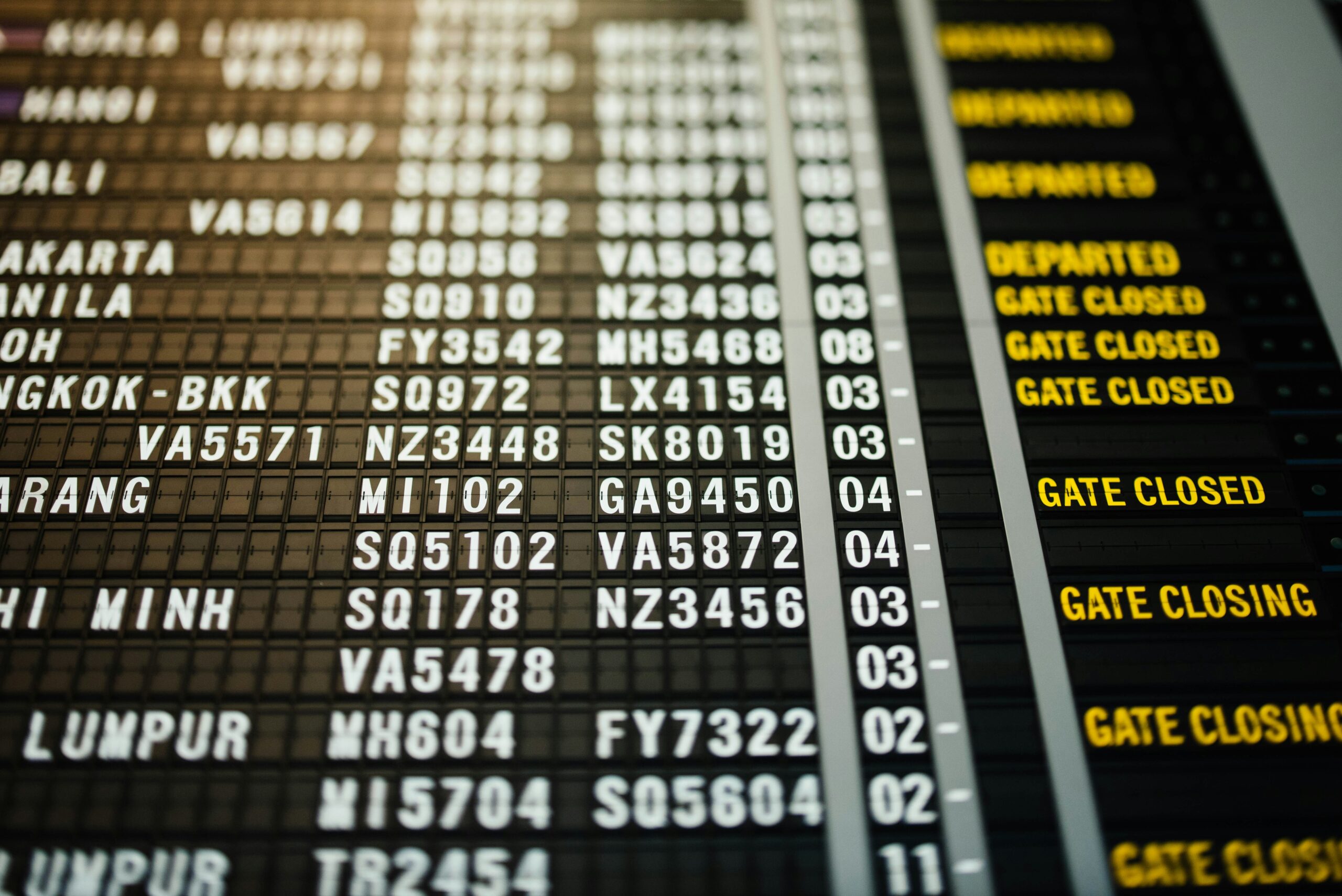
Flight information boards have become a familiar sight for disrupted passengers — but the rights that apply depend on what happens next at the gate. Photo: CHUTTERSNAP / Unsplash
The Refund Right — And the One Move That Eliminates It
Under the current DOT automatic refund rule, you are entitled to a full cash refund to your original payment method if your flight is cancelled or significantly delayed and you choose not to travel. For domestic flights, a significant delay is defined as three hours or more from your original departure or arrival time. For international flights, the threshold is six hours.
The critical word is “choose.” The refund right exists only if you decide not to travel on the disrupted or alternative itinerary. The moment you accept a rebooking on a later flight, say yes to a rerouting, or click “accept” on the airline app when an alternative is offered — the refund right is gone. You have chosen to travel. The airline’s obligation to return your money disappears with that decision.
The gate agent’s script is designed around this moment. When a flight is cancelled or significantly delayed, the first thing airlines do is offer rebooking. Operationally this makes sense — they want to recover the disruption and get passengers moving. But the rebooking offer is also the mechanism by which the refund obligation is most commonly extinguished. You are not told that accepting rebooking eliminates your cash refund right. The agent’s job is to rebook you, not to explain the legal consequences of accepting.
The same logic applies to eCredits and travel vouchers. Airlines configure their apps and self-service kiosks to present the voucher as the default option. Accepting it is fast, easy, and means the money stays with the airline. Under DOT rules, passengers are legally entitled to cash — but the rule also requires the airline to make that clear. Whether that clarity actually reaches you in the middle of a chaotic disruption is a different question. A February 2026 audit found that several ultra-low-cost carriers were still routing passengers toward credits before offering cash refunds as required.
What “Controllable” and “Uncontrollable” Actually Means
The distinction between a controllable delay and an uncontrollable one is one of the most consequential classifications in aviation — and one almost no passenger understands. It determines whether an airline’s customer service commitments kick in: meals, hotel accommodation, ground transport, rebooking priority.
A controllable disruption is one caused by factors within the airline’s operational control: a mechanical issue, a crew scheduling problem, a fueling delay, a cleaning turnaround that ran long. An uncontrollable disruption is one caused by external factors: weather, ATC ground stops, a third-party security event.
What most passengers do not know is that this classification is made internally by the airline’s Network Operations Center. There is no independent verification of delay codes at the time of disruption. Airlines have a financial incentive to code disruptions as uncontrollable wherever operationally defensible — because uncontrollable disruptions do not trigger the service commitments listed on the DOT’s airline customer service dashboard.
The dashboard itself is important context. Following pressure from the Biden DOT, all major US carriers signed up to provide meals and hotel accommodation for controllable cancellations and significant delays. These are voluntary commitments, not legal mandates. And they are only as good as the delay code assigned to your flight in the NOC. Understanding that your IROP is being managed at a network level — not by the gate agent standing in front of you — explains why the conversation at the desk often feels limited. The agent is working within constraints set floors above them.

The waiting game at the gate is familiar to millions of summer travelers — but what you are owed depends heavily on what caused the disruption, and who made that call. Photo: JESHOOTS.COM / Unsplash
Overbooking — Where US Cash Rights Are Actually Strongest
The counterintuitive truth of US passenger rights is this: the scenario where you have the most genuine leverage is not a cancellation or a delay. It is being bumped off a flight you were confirmed on.
Overbooking is legal, deliberate, and deeply integrated into airline revenue management. Airlines use decades of no-show data to sell more tickets than available seats on virtually every departure. The yield management models that drive this practice are sophisticated enough to account for route, day of week, season, fare class mix, and connecting passenger behaviour. Most of the time the model is right and every seat fills without incident. When it misfires, the airline has a problem — and you have leverage.
The DOT’s rules create a two-tier response. First, the airline must solicit volunteers — Voluntary Denied Boarding. Gate agents will offer increasing compensation to persuade passengers to take a later flight. VDB offers are negotiable. The first number is rarely the ceiling. If you have flexibility, the airline needs something from you, and the compensation can be pushed higher as departure approaches.
If the airline cannot find enough volunteers and must remove a confirmed passenger — Involuntary Denied Boarding — the DOT’s cash obligations trigger — formally known as Denied Boarding Compensation (DBC). For domestic flights where the airline cannot get you to your destination within one hour of your original arrival, you are owed cash equivalent to 200% of your one-way fare, capped at $775. If the delay extends beyond two hours, that doubles to 400% of your one-way fare, capped at $1,550. These figures are adjusted periodically by the DOT for inflation.
| Scenario | Delay Window | Cash Owed |
|---|---|---|
| Domestic IDB | 1–2 hrs late to destination | 200% one-way fare, max $775 |
| Domestic IDB | Over 2 hrs late to destination | 400% one-way fare, max $1,550 |
| International IDB | 1–4 hrs late to destination | 200% one-way fare, max $775 |
| International IDB | Over 4 hrs late to destination | 400% one-way fare, max $1,550 |
| VDB (volunteer) | Any | Negotiated — no DOT cap |
Airlines know this math precisely. The gate agent soliciting volunteers with a $400 voucher offer is doing so because the alternative — bumping a passenger and paying $775 in cash — is a worse outcome for the carrier. If you understand the IDB threshold, you understand why the VDB offer exists and why it is worth negotiating rather than accepting immediately.
It is also worth noting that load factor on peak summer routes makes overbooking more likely, not less. Airlines push RASM hardest on their highest-demand departures — which are exactly the flights passengers most need to be on. This is not coincidence; it is the structural reality of how airlines are built to operate. As we examined in detail in Why Airlines Go Bankrupt With Full Flights, a full plane is rarely the whole story.
Refund Rules for Baggage Fees — The 12-Hour Rule
One of the least-known provisions of the DOT’s 2024 refund rule covers ancillary fees — specifically checked baggage. If you paid a checked bag fee and your bag is not delivered within 12 hours of your domestic flight arriving at the gate (or within 15 to 30 hours for international, depending on flight length), the airline must automatically refund that bag fee. No request required. No complaint needed.
This provision was in full enforcement as of April 2026. The practical reality, confirmed by a February 2026 compliance audit, is that the four largest carriers — American, Delta, United, and Southwest — have updated their systems. Some ultra-low-cost carriers have not. If your bag is late and your fee is not automatically refunded within the required window, you have a clear DOT complaint with documented grounds.
What to Do When Your Flight Goes Wrong — The Gate Decision Framework
The most important decision you make during a disruption happens in the first 60 seconds at the gate or on the app. Before you tap, click, or say yes to anything, run through this sequence.
First: is the flight cancelled or is there a significant delay (three hours domestic, six hours international)? If yes, you have a refund right — but only if you choose not to travel. If you need to get to your destination and will accept rebooking regardless, this does not affect you operationally — but if your plans are flexible or the disruption is severe, do not accept rebooking before deciding whether you want a refund instead.
Second: if you decide to travel, close the app and go to the desk. Do not accept the first rebooking option without asking what alternatives exist. The app shows you one path. A human agent can see the full inventory, including seats on partner carriers under interline agreements and codeshare arrangements. The app is designed to move you efficiently through the system, not to find you the best outcome.
Third: know whether the disruption is likely controllable. A weather event is not. A mechanical issue, a crew swap, or a late inbound aircraft is. If the delay is controllable and extends to the point where you need a hotel, the airline’s customer service commitment is in play — but you may need to invoke it explicitly. Ask the agent whether the disruption is classified as controllable and what the carrier’s commitment covers. That question alone signals you know more than the average passenger, and agents will respond to it differently.
The ATC staffing situation is also relevant context here. As we covered in FAA Air Traffic Controller Shortage: The Staffing Target Cut, the FAA has been running the system on overtime and reduced staffing for years. ATC ground stops and en-route delays are increasingly common — and always classified as uncontrollable. Summer 2026 will test that system again.
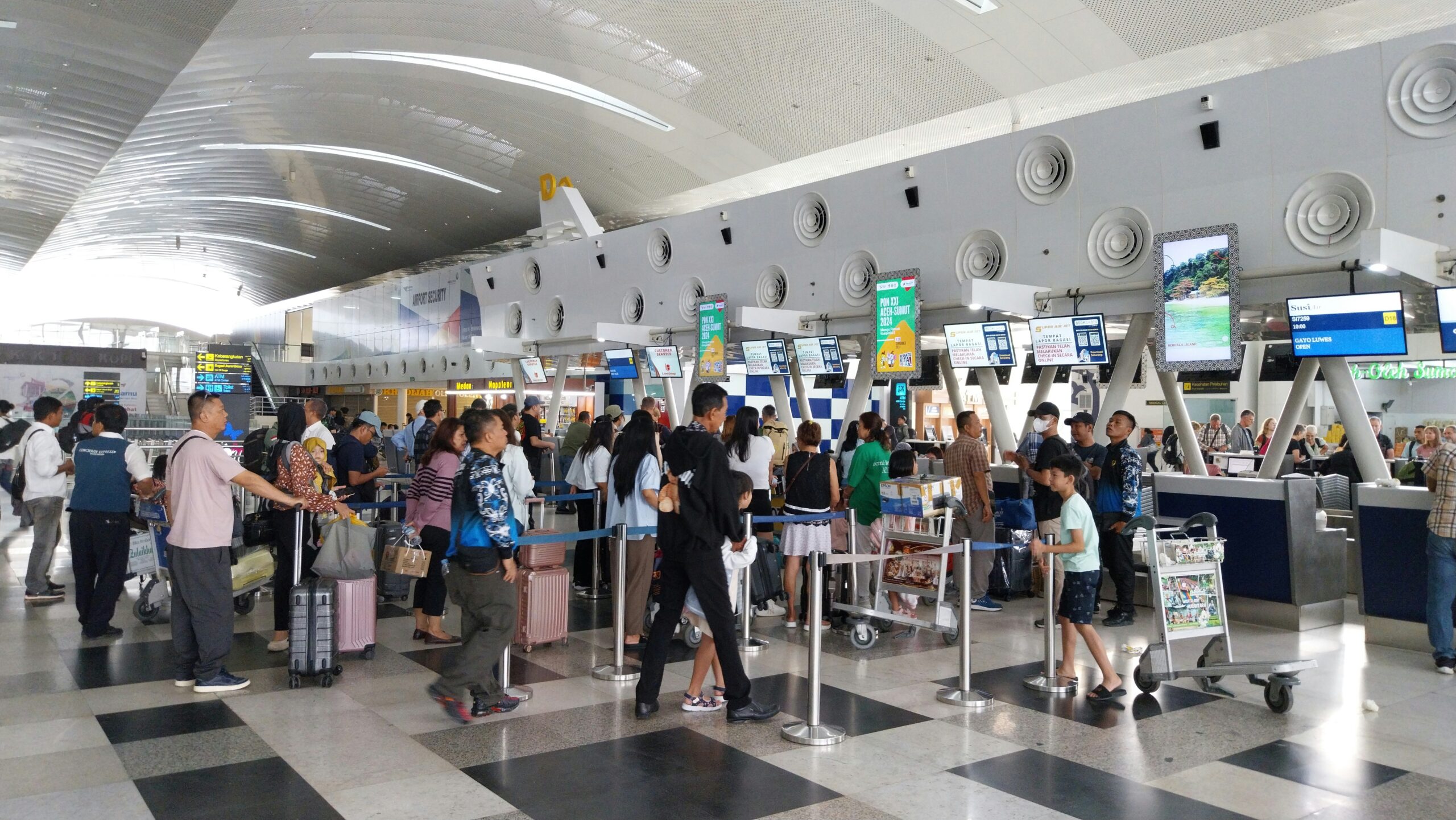
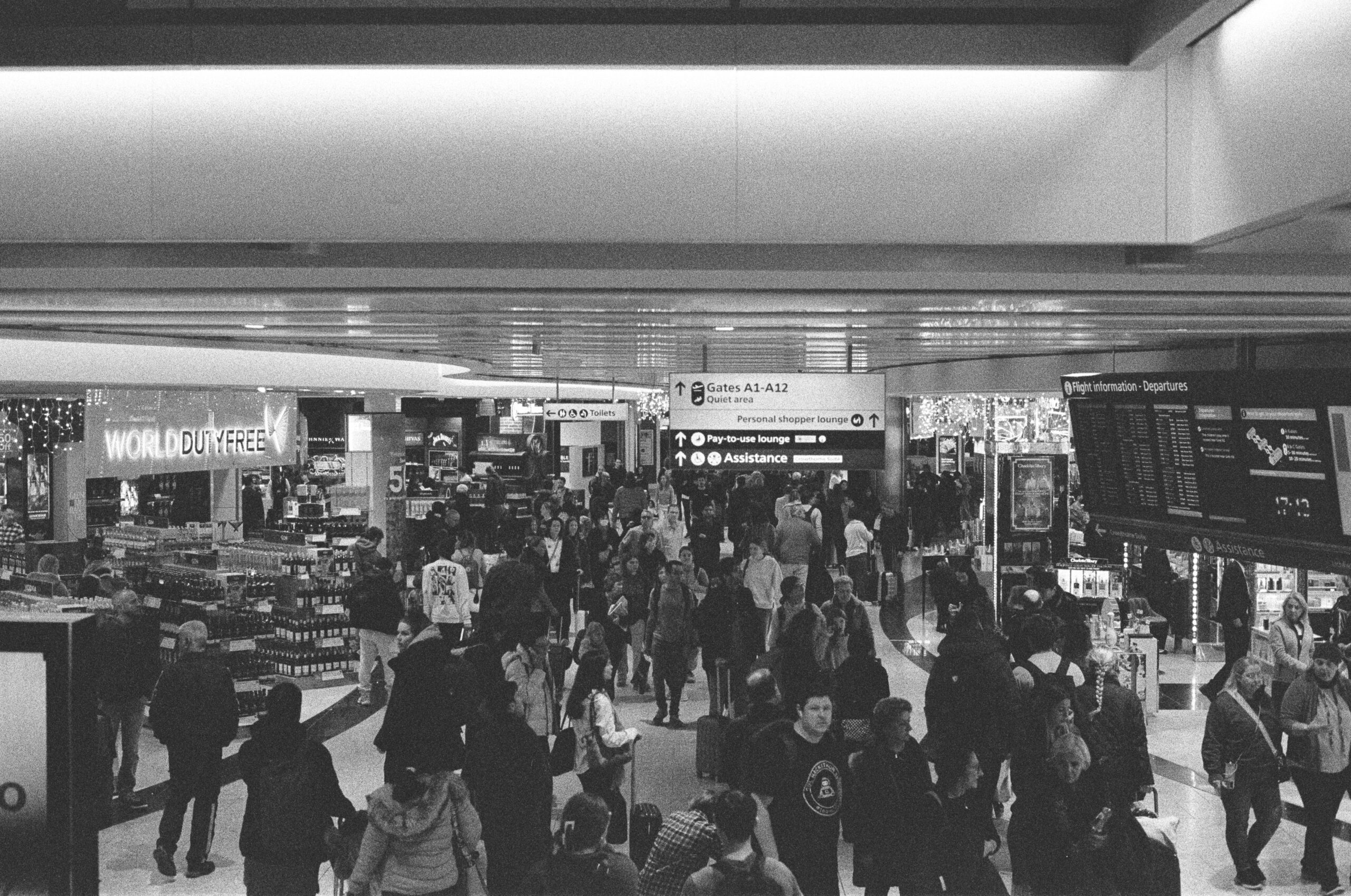
The check-in counter is where most disruption conversations begin — but the decisions that determine what you are owed were made long before you arrived. Photo: Edwin Petrus / Unsplash
The Refund III Situation — Flight Renumbering and June 2026
One additional wrinkle worth understanding before summer travel: the DOT’s Refund III enforcement pause on renumbered flights runs until June 30, 2026. Under the original Biden-era refund rule, if an airline changed your flight number, the original flight was technically treated as cancelled — triggering a refund right. The DOT has temporarily paused enforcement of this provision while it works through a rulemaking to redefine what a “cancelled flight” means.
In practice, this means airlines can consolidate schedules and renumber flights without triggering automatic refund cascades — provided the rerouting does not constitute a “significant change” as defined by the DOT. If your flight gets renumbered and the new itinerary involves a departure three or more hours earlier, an arrival three or more hours later, a different originating airport, or a different destination airport, you retain a refund right. If the renumbering is cosmetic and the schedule is materially the same, the refund right currently does not apply.
The Spirit Airlines collapse earlier this year added another dimension to this picture. With Spirit gone and its routes consolidating into monopoly or duopoly coverage, the fare environment has shifted materially — fewer seats, fewer alternatives, and fewer carriers to rebook onto when things go wrong. A disruption in summer 2026 is not just an inconvenience. On some routes, it means days, not hours, before the next available seat.
The Disruption Kit — What to Carry Before You Fly This Summer
Rights matter. So does being prepared for the hours between knowing your flight is disrupted and finding out what comes next. These are the items worth having before you need them.
- Apple AirTags (4-pack) — If your bag goes missing on a domestic flight, the DOT’s 12-hour baggage fee refund rule requires documented evidence. AirTag timestamps tell you exactly when and where your bag stopped moving.
- High-capacity USB-C power bank — Tarmac delays and gate holds drain phones fast. The DOT’s three-hour tarmac rule applies to domestic flights — but you need your phone charged to document, communicate, and rebook.
- Travel document organizer — Boarding passes, receipts for meals and hotels during a controllable delay, original booking confirmations. Organized documentation is the foundation of any successful DOT complaint or reimbursement request.
- Global eSIM card — If an international disruption leaves you rerouted through an unplanned city, airport Wi-Fi is unreliable when you need it most. A global eSIM means you can rebook, communicate, and document without depending on terminal infrastructure.
What to Know Before You Fly This Summer
The headline version of US passenger rights in 2026 is this: you have a real, enforceable automatic refund right if you choose not to travel after a cancellation or significant delay. You have genuine cash leverage if you are bumped involuntarily. And you have ancillary fee protections that most passengers do not know exist. What you do not have is the EU-style mandatory cash compensation for airline-caused delays that was proposed and then withdrawn.
The gap between what passengers expect and what the law actually provides is where airlines operate most comfortably. Understanding the gap is the first step to closing it.
The Conditions of Carriage that govern your journey are available on every carrier’s website. They are almost never read. They are always enforced. Knowing they exist — and invoking them by name when a disruption goes wrong — signals to an agent that they are not dealing with a passenger who will accept whatever is offered first. That changes the conversation more than almost anything else you can do at the gate. It is the same reason experienced travellers still invoke Rule 240 at the gate — a rule that no longer legally exists but whose invocation consistently produces results, because it signals the same thing: you know the system.

Frequently Asked Questions
Am I entitled to cash compensation if my US flight is delayed?
Not automatically. The mandatory cash compensation rule for airline-caused delays was withdrawn by the DOT in November 2025 and no longer applies. You are entitled to a cash refund to your original payment method if your flight is cancelled or significantly delayed (three hours domestic, six hours international) and you choose not to travel. If you accept rebooking, the refund right is extinguished.
What happens to my refund right if I accept rebooking?
It disappears. Under current DOT rules, choosing to travel on a rebooked itinerary following a cancellation or significant delay waives your right to a cash refund. This applies whether you accept the rebooking at the gate, through the airline’s app, or by responding to a rebooking offer. Do not accept rebooking until you have decided whether you want a refund instead.
How much cash am I owed if I am bumped from a flight against my will?
If you are involuntarily denied boarding on a domestic flight and the airline cannot get you to your destination within one hour of your original arrival time, you are owed 200% of your one-way fare up to a maximum of $775. If the delay to your destination exceeds two hours, the compensation doubles to 400% of your one-way fare up to a maximum of $1,550. These are cash payments — not vouchers.
Does the airline owe me a hotel if my flight is cancelled overnight?
Possibly, but only if the cancellation is classified as controllable — caused by something within the airline’s operational control such as a mechanical issue or crew problem. Controllable cancellation commitments (meals, hotel, ground transport) are voluntary pledges made by US carriers to the DOT, not legal mandates. Whether they apply depends on how the airline’s operations center has coded the disruption. Weather and ATC-related cancellations are classified as uncontrollable and do not trigger these commitments.
Can I get my baggage fee refunded if my bag is delayed?
Yes. Under the DOT’s 2024 automatic refund rule, which entered full enforcement in April 2026, airlines must automatically refund checked baggage fees if your bag is not delivered within 12 hours of a domestic flight arriving at the gate. For international flights, the window is 15 to 30 hours depending on flight length. No request is required — the refund should be automatic to your original payment method.