Unapproved Aircraft Parts:
Inside the AOG Technics Scandal
In January 2026, twelve containers of condemned aircraft engine parts were scheduled for destruction at a facility in Spain. They never made it.
A third party — impersonating the contracted mutilation provider — intercepted the shipment before it could be destroyed. Inside those containers: 625 serialized parts, including engine-critical and life-limited components, plus nearly 10,000 non-serialized parts covering some of the most common engine families flying today.
As of this writing, those parts have not been found.
EASA issued an urgent safety alert on March 26, 2026 (reference OC-EASA-2026002221). The UK Civil Aviation Authority followed on April 14, 2026. Transport Canada issued CASA 2026-05 on April 13, 2026. The parts are somewhere inside the global aviation supply chain right now — and the system designed to catch unapproved aircraft parts was never built to handle this.
This is not a story about one theft in Spain. This is a story about a certification and traceability system that a former techno DJ already proved he could defeat with a home computer and a printer — and why, three years later, the fundamental vulnerability still exists.
Understanding Life-Limited Parts and Aviation Safety
To understand why the Spain theft is so serious, you need to understand what was actually stolen.
Every commercial jet engine contains two categories of components. Standard parts — bolts, seals, washers, bushings — can be overhauled, inspected, and returned to service multiple times. Life-limited parts (LLPs) are categorically different. These are the high-stress rotating components at the core of the engine: turbine disks, compressor disks, fan hubs, and similar structures that spin at extreme speed under extreme heat for thousands of hours.
Life-limited parts are assigned a fixed cycle life — a maximum number of takeoff and landing cycles — by the manufacturer and certified by regulators. When a part reaches that limit, it is retired. Not inspected and cleared. Not overhauled. Retired and physically destroyed.
The reason is metal fatigue. Components cycled through extreme stress thousands of times develop microscopic fatigue propagation that no inspection can fully quantify. The certified cycle life exists because beyond that threshold, the risk of failure becomes statistically unacceptable.
And when a life-limited rotating disk fails at speed, it does not fail quietly.
A turbine disk spinning at tens of thousands of RPM stores enormous kinetic energy. An uncontained failure — where fragments breach the engine casing — can penetrate the aircraft fuselage, sever hydraulic lines, destroy adjacent engines, and in the worst cases reach the cabin. This is why both the FAA and EASA mandate physical destruction of retired life-limited parts. The only safe LLP at end of life is one that cannot be installed.
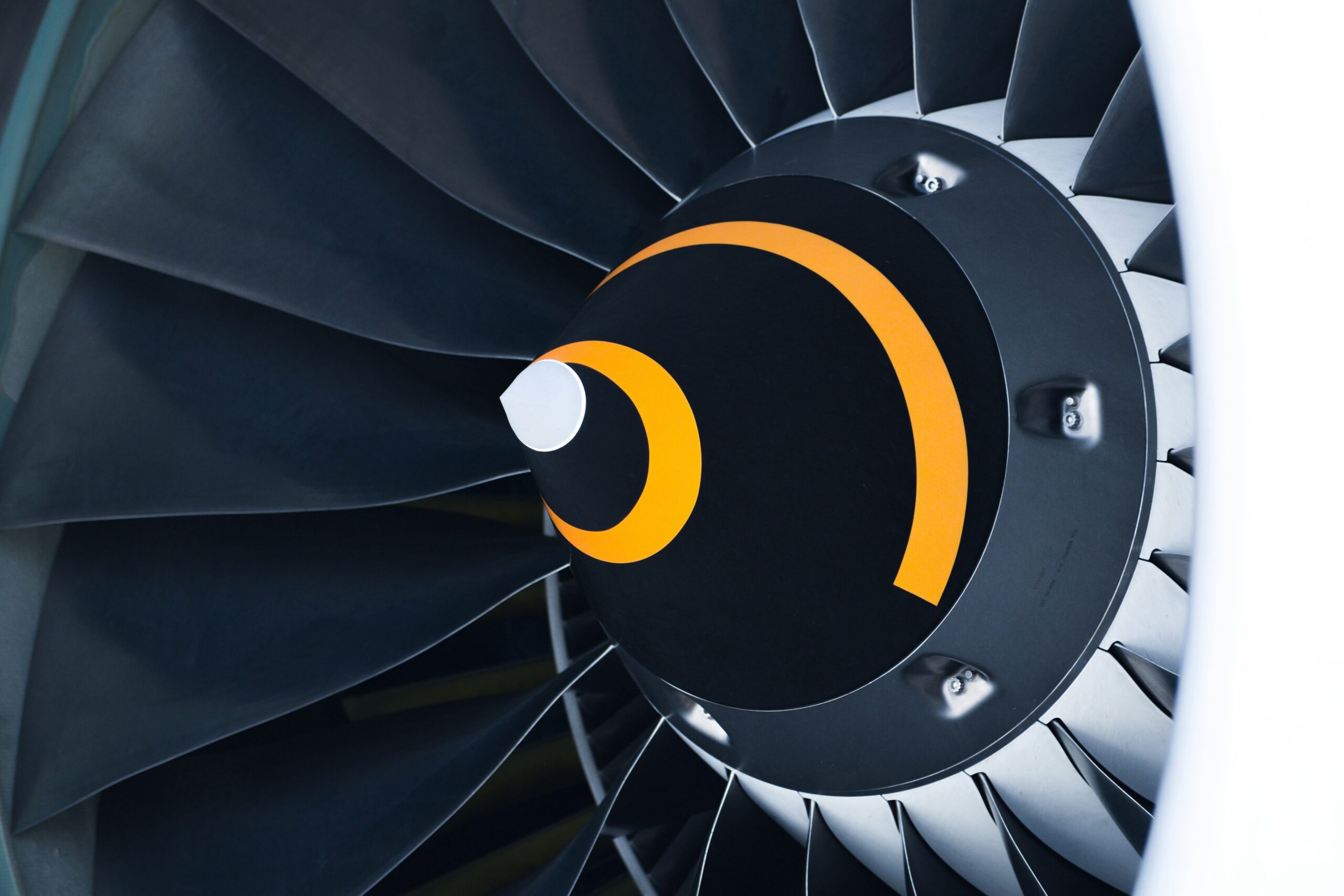
Jet engine turbines contain life-limited parts that must be physically destroyed at end of certified cycle life. Photo: Luka Slapnicar / Unsplash
The 625 serialized parts stolen in Spain include components in exactly this category. They were declared non-airworthy. They were designated for destruction. Someone decided they were worth more as counterfeit inventory.
The AOG Technics Scandal: How Forged Certificates Fooled the Industry
The Spain incident did not emerge in a vacuum. It follows the most significant aviation parts fraud case in recent history — one that concluded in a London courtroom in February 2026 and exposed exactly how vulnerable the certification system is to counterfeit aircraft components.
Between January 2019 and July 2023, a UK-based company called AOG Technics sold more than 60,000 fake engine parts to airlines, maintenance facilities, and parts distributors around the world. The parts were primarily intended for the CFM56 engine — the most widely used turbofan in commercial aviation, powering the Boeing 737 Next Gen and Airbus A Three Twenty CEO families.
The man behind it was Jose Alejandro Zamora Yrala, a 38-year-old former techno DJ.
Zamora operated from a home office. He forged FAA Form Eight One Thirty Dash Three airworthiness release certificates and EASA Authorized Release Certificates on a standard home computer. He invented fake employees. He sent emails to customers signed by quality managers who did not exist. He created a paper trail sophisticated enough to pass through the receiving inspections of some of the world’s largest airlines.
Airlines affected included Delta Air Lines, Southwest Airlines, Ryanair, TAP Air Portugal, WestJet, and Virgin Australia. Over 180 engines were identified as containing AOG-supplied parts. Aircraft were grounded across multiple continents. Total industry losses came to an estimated $53 million.
The fraud ran for four years.
It was discovered because a TAP Air Portugal mechanic noticed that a bolt supplied by AOG Technics did not fit its hole.
Not a digital verification system. Not a regulatory audit. A bolt that did not fit.
The mechanic contacted Safran — co-owner of CFM International — to verify the part’s documentation. Safran confirmed the certificate was fake and alerted authorities. The UK Serious Fraud Office opened a criminal investigation. In December 2025, Zamora pleaded guilty to fraudulent trading. On February 23, 2026, he was sentenced to four years and eight months in prison.
The judge described the fraud as “a more or less complete undermining of a regulatory framework designed to safeguard the millions of people who fly every day.”
AOG Technics vs. The 2026 Spain Theft: Side by Side
| AOG Technics (2019–2023) | Spain Theft (January 2026) | |
|---|---|---|
| Parts involved | 60,000+ engine components | 625 serialized + 9,740 non-serialized |
| Part type | Primarily non-serialized CFM56 consumables | Includes life-limited / engine-critical parts |
| Engine families | CFM56 | CFM56, V2500, PW1100G, RB211 |
| Aircraft affected | 737 Next Gen, A Three Twenty CEO | 737 Next Gen, A Three Twenty CEO, A Three Twenty Neo, 747, 757, 767 |
| Method | Forged release certificates | Stolen before destruction, re-entry unknown |
| Status | Sentenced February 2026 | Parts not recovered as of publication |
| Industry losses | $53 million confirmed | Unknown — parts not yet located |
| Regulatory response | FAA, EASA, UK CAA alerts | EASA, UK CAA, Transport Canada alerts |
Aviation Parts Traceability: Where the Certification System Fails
The AOG Technics scandal and the Spain theft share the same root vulnerability: a certification and traceability system built on paper, trust, and human inspection.
The FAA Form 8130-3 and EASA Form 1
When an aircraft part is manufactured, overhauled, or returned to service, it is accompanied by an airworthiness release certificate. In the United States, this is the FAA Form Eight One Thirty Dash Three. In Europe, it is the EASA Form 1 or Authorized Release Certificate. These documents certify that the part conforms to approved design data and is in a condition for safe operation.
The problem is what these documents do not do.
They do not contain any real-time verification mechanism. They are not linked to a live database that a receiving inspector can query. There is no QR code that pulls up a manufacturer-confirmed record. There is no digital signature that cannot be replicated on a home computer.
In practice, when a part arrives at an airline maintenance facility, a receiving inspector checks the paperwork against the part number in the maintenance manual. If the numbers match and the documentation looks correct, the part passes receiving inspection and enters inventory.
The inspector is checking a document against another document. The check is the paperwork. And as the AOG Technics scandal demonstrated, the paperwork can be forged by anyone who knows what it is supposed to look like.

The global aviation parts supply chain processes millions of components annually — with certification still heavily reliant on paper documentation. Photo: CHUTTERSNAP / Unsplash
The AOG Pressure Problem
The vulnerability deepens under the operational reality of aircraft maintenance.
When an aircraft is AOG — Aircraft on Ground, unable to operate due to a maintenance issue — the pressure is immediate and significant. Every hour on the ground is revenue lost and passengers disrupted.
The standard parts sourcing chain runs roughly like this: check internal inventory, contact Maintenance Operations Control, confirm what is available in-house, check partner airlines or operators at the same station for a loan or borrow, and if nothing is available locally, go to the manufacturer or approved distributor.
Under AOG pressure, that chain compresses. Speed becomes the priority. And that is precisely the environment that a supplier of unapproved aircraft parts is designed to exploit.
High-Risk Entry Points in the Supply Chain
The highest-risk entry points are well understood within the industry:
- Teardown and scrap disposal — where retired parts can be diverted before destruction, exactly as happened in Spain
- Life-limited part retirement — where a part at end of certified cycle life can be re-documented with a false count
- Broker-to-broker resale — where provenance becomes harder to trace with each transaction
- Emergency AOG sourcing — where speed overrides due diligence
- Non-serialized consumables — where individual part tracking is weakest
- Cross-certification conversion — where documentation moves between EASA Form 1 and FAA Eight One Thirty Dash Three systems
The EASA suspect parts database currently contains over 7,700 entries. The FAA estimates approximately 520,000 unapproved or counterfeit aircraft components enter aviation annually — roughly two percent of the 26 million parts installed on commercial aircraft every year.
The Danger of Counterfeit Components: A History of Aviation Incidents
Partnair Flight 394, September 1989. A Convair CV-580 crashed into the North Sea, killing all 55 people on board. The investigation found that counterfeit and incorrectly treated tail assembly fasteners contributed to destructive vibration and structural failure. This remains the clearest documented case of unapproved aircraft parts directly causing a fatal accident.
Aviatronics LLC / FAA SAFO 20010, 2016–2020. The FAA issued a Safety Alert for Operators warning of intentional falsification of FAA Form Eight One Thirty Dash Three records for avionics and control articles.
Boeing and Airbus Titanium Documentation Fraud, 2024. The FAA investigated titanium sold with falsified quality documentation that entered Boeing and Airbus supply chains through Spirit AeroSystems.
Italy Military Parts Investigation, February 2026. Italian prosecutors opened an investigation into the disappearance of military aircraft parts valued at €17 million — the same documentation fraud playbook applied to military assets.
Current FAA and EASA Regulations on Unapproved Aircraft Parts
The Aviation Supply Chain Integrity Coalition
In the wake of the AOG Technics scandal, GE Aerospace led the formation of the Aviation Supply Chain Integrity Coalition. Founding members included Airbus, Boeing, Delta Air Lines, GE Aerospace, Safran, StandardAero, and United Airlines.
A 2025 progress update indicated that approximately 70 percent of respondents had taken steps toward digital Authorized Release Certificates or digital verification tools. Progress — but not a solution.
The March 2026 Congressional Action
In March 2026, the US House of Representatives passed the Aviation Supply Chain Safety and Security Digitization Act of 2025. The legislation directs the Government Accountability Office to study impediments to digital documentation and verification in aviation parts certification.
A study. Not a mandate. Not a funded implementation.
The technology to solve this problem already exists. Digital certificates with cryptographic verification, blockchain-based parts traceability, and real-time manufacturer confirmation systems are operational in other high-stakes industries. What aviation does not yet have is a regulatory mandate that makes paper-based release certificates non-compliant.
The 2026 Spain Engine Parts Theft: A New Crisis for Part 145 Shops
EASA’s March 2026 alert directs operators and Part 145 approved maintenance organizations to inspect aircraft and inventory, check part and serial numbers against the affected list, quarantine any matches, and notify competent authorities.
The affected engine families — CFM56, IAE V2500, Pratt and Whitney PW1100G, and Rolls-Royce RB211 — collectively power a substantial portion of the global commercial fleet.
The UK CAA issued its safety notice on April 14, 2026. Transport Canada issued CASA 2026-05 on April 13, 2026. No equivalent public FAA alert specifically identifying this Spain incident has been identified at the time of publication.
The parts have not been recovered.
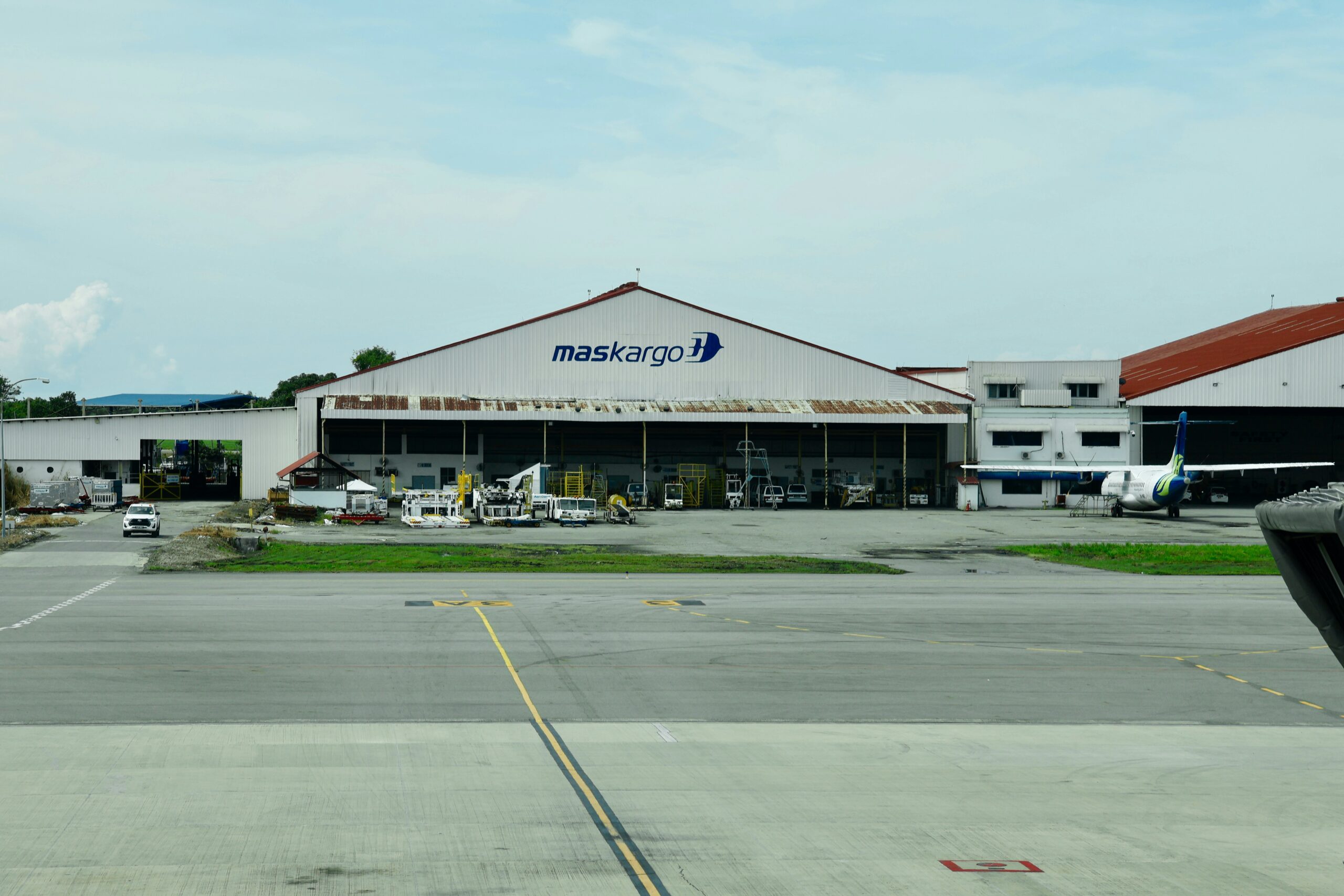
Part 145 approved maintenance organisations are now required to audit their inventories against the EASA alert following the Spain theft. Photo: You Le / Unsplash
Restoring Trust in the Global Aviation Supply Chain
The aviation industry has an extraordinary safety record, built over decades by professionals who take their responsibilities seriously.
But a certification system that still runs primarily on paper documents and visual inspection — in a global aftermarket approaching $50 billion — has a structural gap that one person with a home computer already exploited for four years without detection.
The FAA estimates 520,000 unapproved or counterfeit aircraft components enter aviation annually. The AOG Technics case involved 60,000 parts over four years and cost the industry $53 million to partially remediate. The Spain theft involved 625 life-limited components whose current location remains unknown.
The question is not whether the system can be exploited.
It already has been. Repeatedly. Across decades.
The question is whether the industry and its regulators will implement the digital verification infrastructure that makes the next attempt materially harder — or whether the response will remain a study, a coalition recommendation, and a safety notice directing operators to check serial numbers against a list.
History suggests the answer arrives faster after the next accident than before it.