Category: Fleet & Tech

Aircraft technology, fleet decisions, and engineering analysis

  • Air Cargo Fleet Crisis: Why Freight Is Running Out of Planes

    Air Cargo Fleet Crisis: Why Freight Is Running Out of Planes

    Fleet & Tech

    Air Cargo Fleet Crisis:
    Why Freight Is Running Out of Planes

    The global air cargo industry moves pharmaceuticals, electronics, fast fashion, and e-commerce shipments across every ocean and continent, every single day. It is invisible infrastructure — most people never think about it until it stops working. And right now, the fleet of aircraft that powers it is heading toward a replacement crisis that the industry has no clean answer for.

    The old jets are ageing out. The new ones are not ready. And the gap between those two facts is real, measurable, and already in motion.

    Air Cargo Fleet Crisis — Key Facts
    • 767F production ends December 2027
    • 747F fleet ageing rapidly with no nose-loading successor
    • 777-8F delayed until at least 2028 — uncertified
    • A350F certification still pending — limited initial volumes
    • Atlas Air ordered 20 Airbus A350Fs — breaking decades of Boeing loyalty
    Passenger-to-freighter conversions cannot fully replace purpose-built large freighters

    The Ageing 747 Freighter: The Capability Nobody Can Replace

    Most coverage of the dedicated freighter crisis focuses on the Boeing 767F production shutdown and delays to the 777-8F. Those are real issues. But the aircraft that cargo operators are most anxious about losing is the 747 freighter — and the reason goes beyond age.

    The 747F has a nose door. That front-loading capability is not a cosmetic feature. It is a fundamental operational advantage that no other large cargo aircraft in production can replicate. Outsized cargo — military vehicles, industrial equipment, large aerospace components, livestock — loads straight through the nose. The geometry allows items that physically cannot be loaded through a side door to be carried at all.

    Neither the Boeing 777 freighter nor the Airbus A350F has a nose door. Neither can be retrofitted with one. When the 747F fleet ages out — and it is ageing badly, with many airframes now carrying significant structural fatigue — that capability disappears entirely from the market. There is no successor programme. No manufacturer is building a nose-loading replacement. The 747F is genuinely irreplaceable in that specific operational role, and the industry has no answer for it.
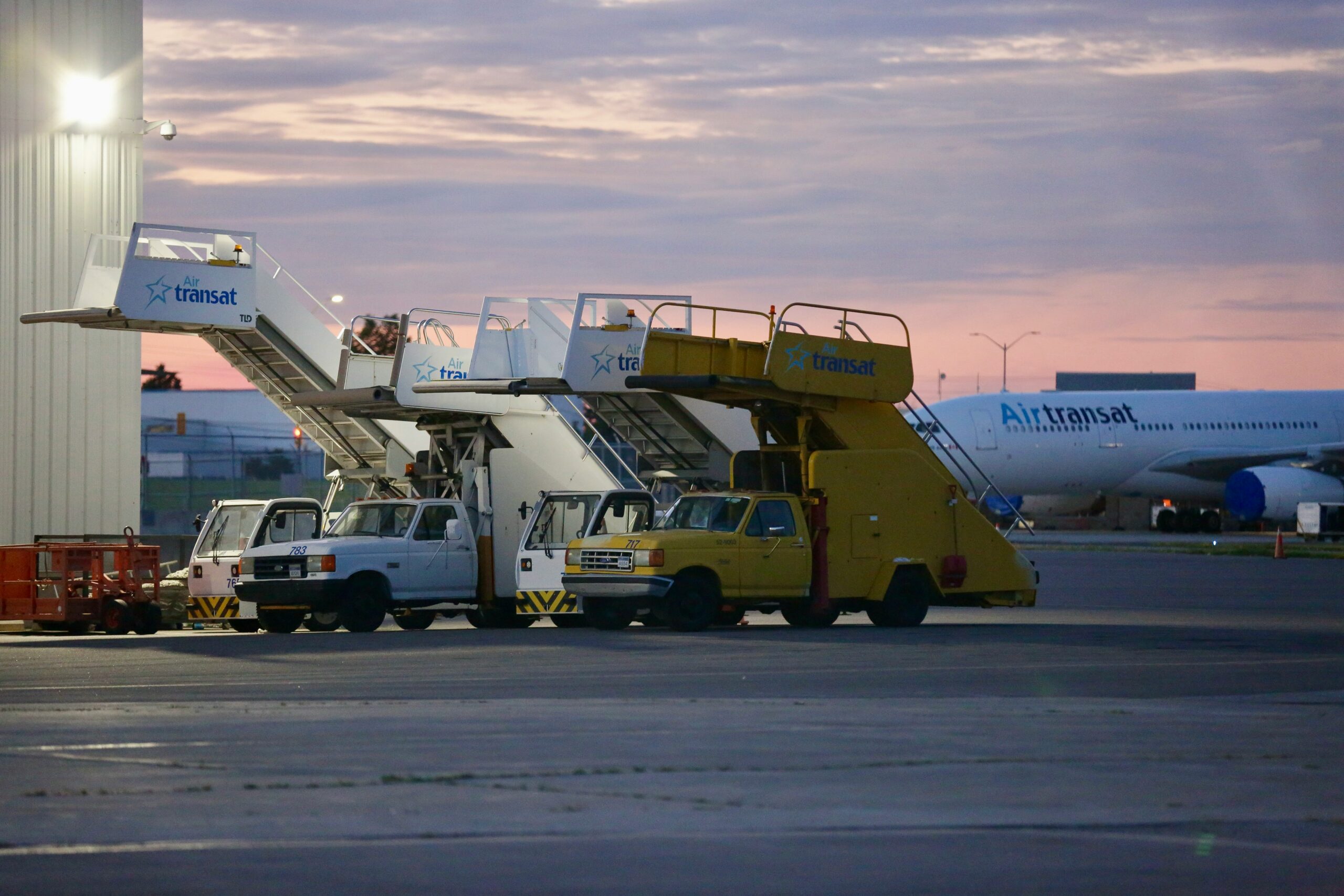
    Large cargo freighter aircraft on airport tarmac

    Photo: Michael / Unsplash

    Why Passenger-to-Freighter Conversions Cannot Bridge the Gap

    When people point to passenger-to-freighter conversions as the bridge solution, they are describing a real but limited tool. The conversion market is active and growing — Boeing forecasts 1,840 conversions as part of the 2,845 total freighter deliveries needed by 2043. But conversions carry significant operational compromises that purpose-built freighters do not.

    A purpose-built freighter is engineered from the ground up for cargo operations. It flies nonstop at maximum payload. A converted passenger aircraft operates under the structural and aerodynamic constraints of its original design. An operator running a converted widebody on a long-haul transpacific route faces a choice: reduce payload to make the range, or carry full payload with a technical stop. Either option degrades the economics versus a purpose-built aircraft.

    For 747 conversions, the structural constraint is definitive. You cannot retrofit a nose door. The nose section of a passenger 747 is not engineered to be opened as a cargo door — the modification would compromise the primary fuselage structure. So a converted 747 becomes a side-loading freighter, losing the single most valuable operational feature of the purpose-built 747F.

    By the time a passenger aircraft is old enough to make conversion economics work, it has typically accumulated significant cycles and airframe hours. Life-limited parts are approaching their mandatory replacement thresholds. Continuing to operate it as a freighter means carrying that maintenance liability forward. The aircraft that look cheap to convert are often the most expensive to keep flying.

    The Engine Bottleneck: New Freighters Sitting Without Engines

    Walk past the delivery lots at Boeing’s Everett facility or Airbus in Toulouse right now and you will see something that should not be possible. Complete airframes. Structurally finished. Painted. Parked on remote tarmac areas without engines.

    The bottleneck is not steel or aluminium. It is the high-pressure turbine blades inside the engines. The casting and forging process requires metallurgical precision at temperatures close to the melting point of the alloy itself. That specialised manufacturing capacity cannot simply be scaled up quickly. Complete, deliverable airframes sit engineless for months while operators wait.

    This connects to a broader pattern of supply chain failures — most visibly documented in the Unapproved Aircraft Parts: Inside the AOG Technics Scandal. The engine overhaul bottleneck is a different failure mode but the same underlying theme: the support infrastructure for aviation was not built for the volume and pace the market now demands.

    Airlines keeping old aircraft flying longer than planned are on an increasingly expensive heavy maintenance treadmill. Every additional year on a 25-year-old 747F or 767F is a year of rising MRO costs, unscheduled groundings, and declining dispatch reliability.
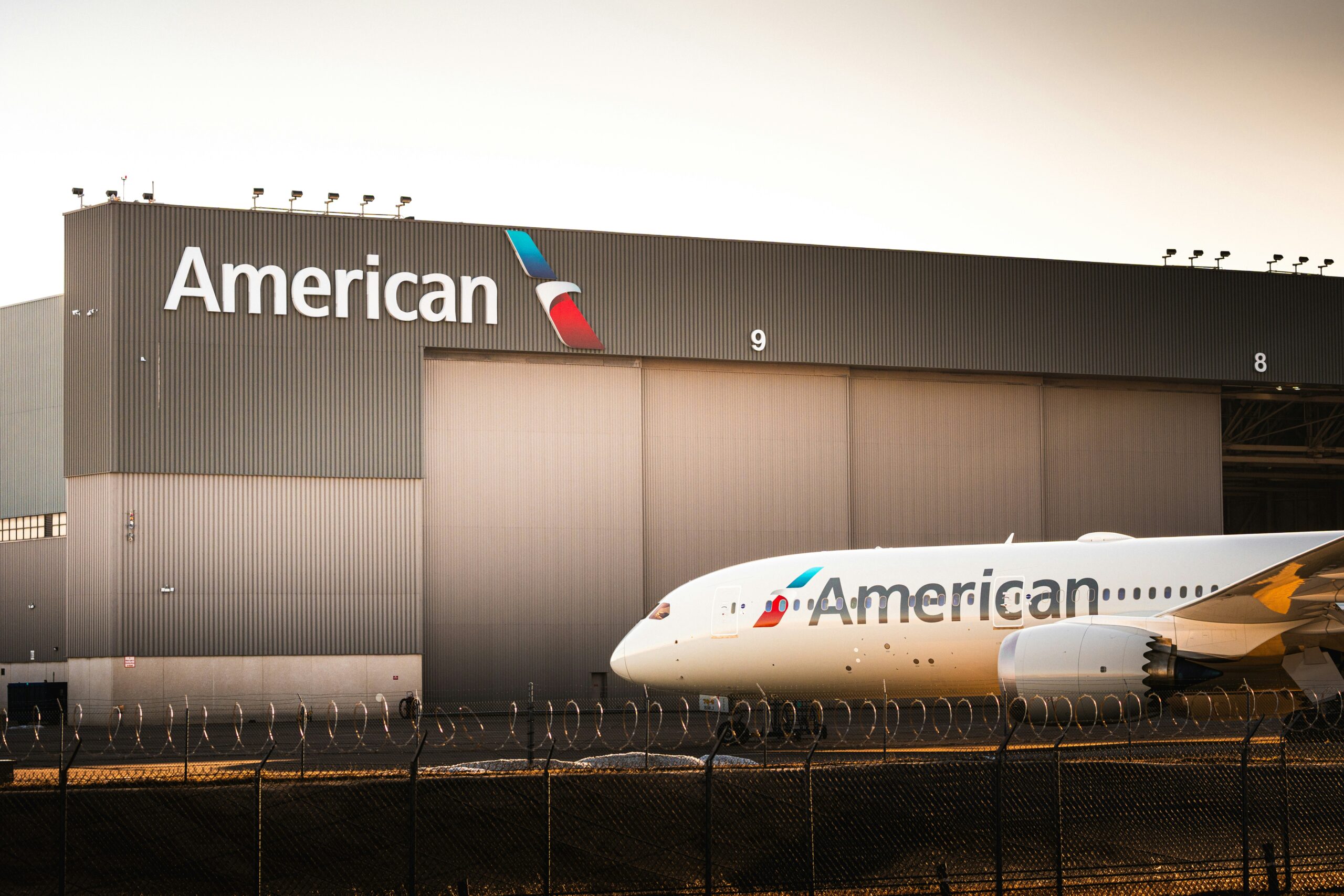
    Wide-body aircraft in maintenance hangar

    Photo: Hieu / Unsplash

    Why Atlas Air Defected to Airbus

    In early 2026, Atlas Air — one of the world’s largest cargo operators and, for decades, an all-Boeing customer — placed a firm order for 20 Airbus A350 freighters. For those who track the cargo industry, this was a significant signal.

    Atlas Air’s fleet has historically been built around Boeing widebodies. The 747F, the 767F, the 777F — all Boeing. The decision to commit to Airbus reflects what every cargo operator is doing right now: running the numbers on what is actually available, when it will be delivered, and what the operating economics look like on the routes that matter.

    Airbus has an outstanding track record on the passenger side. On the dedicated freighter side, their history is much shorter. The A350F is a new programme, largely unproven at operational scale. First deliveries are targeted for late 2027 with limited initial volumes.

    Boeing’s order backlog and delivery constraints — examined in Boeing China Deal 2026: Why the Stock Fell After the Announcement — make the competitive window for Airbus genuinely real. The Atlas defection is not sentiment. It is a production schedule calculation.

    The ICAO Emissions Deadline: The Clock Nobody Can Stop

    ICAO emissions standards for new aircraft deliveries tighten significantly from 2028. The Boeing 767F and current-generation 777F do not meet those standards for new international operations after that date. ICAO has no exemption mechanism — the standard applies at delivery, not at service entry.

    Boeing has already requested an FAA exemption for the 777F — seeking approval to continue delivering additional units past the emissions deadline. That request is a statement about where the 777-8F programme actually stands. If the replacement were on track for timely type certification, there would be no need to keep the old programme alive.

    The FAA is simultaneously managing pressure across multiple fronts — from the FAA Air Traffic Supercenter consolidation risk to controller staffing shortfalls — making the regulatory environment for any exemption request more complex than it might appear.

    The Scale of What Is Needed

    Boeing’s own 20-year cargo forecast projects 2,845 freighter deliveries needed globally by 2043. That figure includes 1,005 production freighters and 1,840 conversions. Airbus projects 2,605 additional freighters required by 2044, split across small, mid-size, and large widebody categories.

    The global dedicated freighter fleet was approximately 2,340 aircraft in 2023. IATA reported 2025 global air cargo demand up 3.4%, with yields still running approximately 37% above 2019 levels. Demand is not the problem. The problem is supply.
    Cargo containers in freight logistics warehouse

    Photo: UZ Creative Services / Unsplash

    How the Crisis Reaches Consumers and Supply Chains

    Every major e-commerce platform depends on air cargo for urgent, high-value, or time-sensitive shipments. The transpacific lanes that connect manufacturing in Asia to consumers in North America and Europe carry billions of dollars of goods expected within days of ordering. This is the belly cargo and dedicated freighter network most consumers never see.

    When air cargo capacity tightens, spot freight rates rise. That cost eventually reaches the consumer — in higher prices, longer delivery windows, or both. The aviation system under maximum pressure examined in Summer 2026: Can the US Aviation System Handle the Strain? is the passenger side of the same structural story. On the cargo side, the pressure is building more slowly but just as inevitably.

    How Operators Are Responding — And Why It Is Not Enough

    Cargo operators are running a combination of strategies: extending the lives of existing freighters through heavy maintenance programmes; acquiring passenger-to-freighter conversions to add mid-size lift; placing firm orders with both Boeing and Airbus to hedge against programme risk; and lobbying for regulatory flexibility to keep current-generation programmes producing longer.

    None of these strategies resolves the fundamental gap. The nose door capability that retires with the ageing 747F fleet does not come back. The purpose-built freighter economics that conversions cannot fully replicate remain a competitive disadvantage on demanding routes. The replacement programmes that should be filling the gap are running years behind the retirement schedule they were designed to meet.

    The air cargo replacement crisis is not a future problem. It is a present one, playing out in maintenance budgets, exemption requests, and order backlogs right now. For context on how airlines manage fleet economics under pressure, read Why Airlines Go Bankrupt With Full Flights.

    Annette Voss
    Annette Voss
    Aviation Industry Analyst

    Annette Voss covers airline operations, fleet strategy, and the business of aviation for Air Ops Ctrl. Her analysis focuses on the structural forces shaping the industry — the decisions, economics, and operational realities that rarely make the headlines.

    Frequently Asked Questions

    Why is there a shortage of cargo planes?
    The air cargo industry is facing a fleet replacement crisis driven by the retirement of ageing 747F and 767F freighters, combined with significant delays to their replacements — the Boeing 777-8F and Airbus A350F. Engine supply chain bottlenecks are compounding the problem, leaving new airframes undelivered and forcing operators to extend the lives of aircraft well past their intended retirement dates.
    When does Boeing stop making the 767 freighter?
    Boeing’s 767F production is scheduled to end in December 2027. The aircraft does not meet upcoming ICAO emissions standards for new deliveries from 2028, meaning operators cannot take new 767F aircraft after that date regardless of order position.
    What replaces the Boeing 747 freighter?
    There is no direct replacement for the 747 freighter’s nose-loading capability. The Boeing 777-8F and Airbus A350F are the next generation of large freighters, but neither features a nose door. The outsized cargo capability that the 747F provides will disappear from the market as the 747F fleet retires with no successor.
    Why did Atlas Air order Airbus instead of Boeing?
    Atlas Air’s decision to order 20 Airbus A350 freighters reflects a straightforward production schedule calculation. Boeing’s 777-8F programme is delayed and uncertified, and 767F production ends in 2027. With Boeing unable to commit to delivery timelines that meet Atlas Air’s fleet planning requirements, Airbus offered a viable alternative — even for an operator with decades of all-Boeing history.
    How does the cargo plane shortage affect consumers?
    When dedicated freighter capacity tightens, spot freight rates rise. Those higher costs move through supply chains and eventually reach consumers — in the form of higher product prices, longer delivery windows, or reduced availability of time-sensitive goods. E-commerce, pharmaceuticals, and electronics are the sectors most directly exposed to air cargo capacity constraints.
  • Why Airlines Go Bankrupt With Full Flights

    Why Airlines Go Bankrupt With Full Flights

    Airline Business

    The Full Flight Fallacy:
    Why Airlines Go Bankrupt With Packed Planes

    Spirit Airlines did not collapse because people stopped flying. Its aircraft were still full. The real failure happened deep inside the economics of modern aviation, where fuel exposure, debt payments, labor contracts, and seat-mile math can quietly destroy an airline long before passengers notice anything is wrong.

    This is the financial paradox that insiders have understood for decades but rarely makes it into the headlines: a packed airplane is not proof of a healthy airline. It is often the bare minimum required to survive another quarter. Understanding why requires looking at how airlines actually make — and lose — money, and why the structure of the business makes collapse possible even when demand is strong.

    The Load Factor Myth: Airline Economics Beyond Full Flights

    Why do airlines go bankrupt even when flights are full? Airlines go bankrupt despite high load factors because passenger volume does not guarantee profitability. If an airline’s Revenue per Available Seat Mile (RASM) falls below its Cost per Available Seat Mile (CASM), it operates at a net loss regardless of how many seats are filled. High fixed costs create extreme pressure on margins. When unit costs outpace yields, flying packed planes merely accelerates cash burn.

    • High aircraft lease obligations due regardless of occupancy
    • Fuel price volatility that hits costs before fares can adjust
    • Labor contracts that lock in costs even when revenue drops
    • Maintenance and MRO reserves charged per flight cycle
    • Airport fees, handling, and debt service on every departure
    • Weak revenue per seat mile (RASM) on price-driven routes

    The instinct is completely logical. You paid for a ticket. The flight is full. The airline collected money from every seat on the aircraft. Multiply that by hundreds of flights a day and it sounds like an industry printing cash.

    The reality is the opposite of that picture. Revenue from ticket sales is only one side of a very complicated equation, and it is not always the winning side. Every single flight carries a cost that exists whether the plane is full or empty: the lease payment on the aircraft, the fuel burn, the crew wages, the maintenance reserve, the airport fees, the ground handling charges, the insurance, the debt service. These costs do not move with occupancy. They are fixed obligations that an airline owes before a single passenger boards.

    Busy airport terminal packed with travelers — a full flight does not guarantee airline profitability

    Photo: Lx1 / Unsplash

    CASM vs RASM Explained: Why Airlines Lose Money on Full Planes

    CASM — Cost per Available Seat Mile — measures what it costs an airline to fly one seat one mile. It captures everything: fuel, labor, maintenance, airport fees, overhead, and debt. RASM — Revenue per Available Seat Mile — measures how much revenue the airline actually generates per seat per mile flown, across all sources including tickets, bag fees, and ancillary revenue.

    Survival is simple in theory: RASM must exceed CASM. When it does, the airline makes money. When it does not, the airline loses money on every mile it flies — and the fuller the planes, the faster the losses accumulate.

    MetricHealthy CarrierCarrier in Distress
    Load Factor82%95%
    Average Fare$180$79
    RASM14.2¢8.6¢
    CASM12.8¢9.4¢
    Unit Margin+1.4¢−0.8¢
    ProfitabilityPositiveLosing money per mile

    The margin between these two numbers in the airline industry is razor thin under normal conditions. Major network carriers often operate on net profit margins in the low single digits. Ultra-low-cost carriers, which compete almost entirely on price, operate on even tighter spreads — and have almost no buffer when costs move against them.

    Fuel is the most volatile input. A sudden spike in jet fuel prices can turn a positive RASM/CASM spread into a negative one overnight. Unlike ticket prices, which take time to adjust in a competitive market, fuel costs hit immediately. Airlines that have not hedged their fuel exposure — locking in prices through financial instruments in advance — are fully exposed to every move in the oil market. Spirit, for most of its later years, carried significant unhedged fuel risk. When fuel moved, their margins collapsed.

    Airline Lease Costs: Why Flying More Can Hurt Profitability

    Airlines do not own most of their aircraft. They lease them — from lessors who charge a fixed monthly rate regardless of how much or how little the aircraft flies. Think of it like leasing a car: if you stop making payments, you hand the car back. But handing it back does not erase what you already owe. There are penalties, early termination fees, and sometimes continued obligations on the remaining balance.

    Aircraft in maintenance hangar — fixed costs like MRO drain airline cash regardless of load factor

    Photo: You Le / Unsplash

    The theoretical solution to a lease obligation is straightforward: fly the aircraft more. More flying means more revenue to cover the fixed cost. But this logic breaks down when every additional flight also consumes more fuel, more crew hours, more MRO budget, and more airport fees. If the unit economics are already negative — if CASM is beating RASM — then flying more does not solve the problem. It accelerates the losses.

    This is the trap that catches ultra-low-cost carriers especially hard. Their entire model depends on keeping fares low to drive volume. But when cost pressures rise — fuel, labor, maintenance — they have very little pricing power. Their customer base chose them specifically because they were the cheapest option. Raising fares to restore margins risks losing those passengers entirely to a competitor or simply to a different mode of transport.

    Case Study: How Spirit Airlines’ CASM Outpaced Its Yields

    Spirit’s failure was not a surprise to anyone who understood what the business was actually doing. The ultra-low-cost carrier model — stripped back service, heavy ancillary fees, high-density seating, point-to-point routes — was built on a specific assumption: that low fares would generate enough volume to make the per-seat economics work even at razor-thin margins.

    The problem was that Spirit was operating with a legacy carrier cost structure in some areas while charging ultra-low-cost fares. Labor costs, particularly after pandemic-era contract negotiations, moved significantly higher across the industry. Pilot wages at Spirit increased substantially, and those costs do not compress when ticket prices stay low. The gap between what Spirit collected per seat and what it cost to operate that seat narrowed dangerously, then turned negative.

    The load factor stayed high. Passengers kept booking. But the revenue those passengers generated was not enough to cover what it cost to carry them. Spirit was flying full planes at a loss. Every departure was consuming cash rather than generating it. A legacy carrier model dressed in ultra-low-cost fares is not a business model — as the collapse proved, it is a countdown.

    What Makes an Airline Financially Healthy

    The carriers that consistently survive — and occasionally thrive — share a set of characteristics that have nothing to do with how full their flights are. They start with margin: the ability to charge a fare that genuinely covers the cost of the seat plus a buffer. That requires either premium product, a network monopoly on certain routes, or a cost structure so lean that even low fares generate positive unit economics.

    Airport terminal exterior — airlines can collapse even when passenger demand remains high

    Photo: T.H. Chia / Unsplash

    The second element is revenue diversification. The most financially resilient airlines in the world generate significant income from sources that have nothing to do with flying passengers. Co-branded credit card programs — where a bank pays the airline for miles to give to cardholders — generate billions of dollars annually for carriers like American, Delta, and United. This income is high margin, predictable, and completely immune to fuel prices and load factor. Delta’s SkyMiles program is, by some estimates, worth more than the airline itself. That is not a coincidence. It is the financial backbone that allows the airline to absorb operational shocks that would destroy a carrier without that cushion.

    Yield management — the science of pricing seats dynamically to extract maximum revenue from every flight — is the third pillar. Airlines that do this well are not just filling seats. They are filling seats at the right price at the right time, optimising RASM continuously rather than simply chasing volume. A flight that departs 85% full but with a strong average fare can generate more profit than a flight that departs 98% full with heavily discounted seats.

    Finally, the survivors maintain discipline on capacity. They do not fly routes simply because they can. Hub and spoke networks are managed to protect high-margin connections. Stage length is calibrated to aircraft type. When a route stops making economic sense, it gets cut — regardless of what the load factor looks like.

    Why the Airline Industry Is Structurally Fragile

    Aviation is an industry that has destroyed more capital than almost any other over its history. Warren Buffett famously joked that a far-sighted capitalist should have shot down the Wright Brothers’ plane at Kitty Hawk — a reference to how poorly airline investors have fared over the long run. The structural reasons are not a mystery.

    The business requires massive upfront capital — aircraft, infrastructure, route authorities — with returns that take years to materialize. It operates in a market that is structurally competitive because seats are a commodity and passengers, by and large, will choose the cheapest available option for a given route. Labor costs are high, unionized, and largely non-negotiable once contracts are signed. Fuel costs are unpredictable and largely uncontrollable. And the entire operation is exposed to events — pandemics, geopolitical disruptions, recessions — that can eliminate demand overnight.

    In this environment, a full plane is not a signal that an airline is healthy. It is a signal that people want to travel. Whether the airline is capturing enough value from that demand to survive is a completely separate question — one that gets answered not at the gate, but deep inside the cost accounting that most passengers never see.

    The next time you board a completely full flight and assume the airline is having a great day, remember Spirit. The planes were full right up until they were not flying at all.


    Frequently Asked Questions

    Why do airlines go bankrupt even when flights are full?

    Because load factor — the percentage of seats filled — does not equal profitability. Airlines must generate more revenue per seat mile (RASM) than it costs to operate that seat mile (CASM). When fixed costs like leases, labor, fuel, and debt outpace ticket revenue, full planes still lose money on every departure.

    What is CASM in aviation?

    CASM stands for Cost per Available Seat Mile. It measures the total operating cost of flying one seat one mile, including fuel, crew, maintenance, airport fees, and overhead. It is the primary cost metric used to evaluate airline financial efficiency.

    What is RASM in aviation?

    RASM stands for Revenue per Available Seat Mile. It measures all revenue an airline generates per seat per mile flown, including ticket sales, bag fees, and ancillary charges. When RASM exceeds CASM, an airline is profitable. When it does not, the airline loses money on every mile flown.

    Why are airline profit margins so thin?

    Airlines face a combination of high fixed costs, intense price competition, volatile fuel prices, and heavy capital requirements. Because seats are treated as a commodity by most passengers, pricing power is limited. The result is an industry that frequently earns single-digit net profit margins even in its best years.

    Can airlines lose money on sold-out flights?

    Yes. If the average fare on a sold-out flight is below the cost of operating that flight — accounting for fuel, crew, lease payments, airport fees, and maintenance — the airline loses money on every seat sold. This is precisely what happened at Spirit Airlines before its collapse: high load factors, negative unit margins.

    Further Reading

    For more on how airlines price seats and protect revenue, see our explainer on yield management and the role of ancillary revenue in the modern airline business model. For context on the Spirit collapse and what it means for airfare going forward, read: Why Are Flights So Expensive? Spirit’s Collapse and the End of Cheap Airfare.

    Recommended reading: Flying Blind by Peter Robison — what happens when airline cost pressure overrides operational judgment. And Hard Landing by Thomas Petzinger Jr. — the definitive insider account of the industry’s financial wars.

    Annette Voss
    Annette Voss
    Aviation Analyst · Air Ops Ctrl

    Aviation industry analyst and the voice behind Air Ops Ctrl. Annette covers the operational realities, business decisions, and safety systems that shape modern commercial aviation — the stories behind the headlines, not just the headlines themselves.